The best lightweight hydration packs make it easier to drink regularly without carrying a bulky backpack or stopping to reach for a bottle. The right design balances water capacity, fit, storage, ventilation, and stability for your preferred activity.
We’ve gathered 10 options with features suited to trail running, hiking, cycling, and general outdoor use. Use the guide below to compare pack styles and choose the capacity and fit that match your routine.
Best 10 Lightweight Hydration Packs Picks for 2026
Trail-Ready Value
Teton Oasis Trailrunner Hydration Backpack

- 2L bladder with wide, ice-friendly opening
- Adjustable padded fit for varied body types
- Six pockets plus sewn-in rain cover
Best For: Day hikers wanting comfort, storage, and weather protection
Rugged 3L Carry
MARCHWAY Tactical MOLLE Hydration Pack

- 3L TPU bladder with quick-release valve
- Durable 1000D water-repellent nylon
- MOLLE webbing and stabilizing straps
Best For: Demanding outings where capacity and durability matter
Easy-Sip Lightweight Pick

- 14-ounce listed weight
- 2L BPA- and PVC-free bladder
- Fast-flow twist-lock bite valve
Best For: Running and cycling with light, simple hydration
Ultralight Storage Vest
N NEVO RHINO 12L Hydration Backpack

- 8.5-ounce listed pack weight
- 12L capacity with 2L bladder
- Waterproof nylon and breathable mesh back
Best For: Active users needing minimal weight and extra storage
Best Lightweight Pick

- 1.1-pound total weight with 2L bladder
- Adjustable chest and waist straps
- Compact design with splash-resistant nylon
Best For: Streamlined running, cycling, and day-hike hydration
Best for Organized Carry
Maelstrom 2L Hydration Backpack

- About 1.1 pounds with a 2L bladder
- Four pockets plus helmet storage
- Reflective strips and ventilated back panel
Best For: Cycling, running, and hikes requiring organized storage
Best Storage Capacity

- 10L pack capacity with a 2L bladder
- Five pockets, including dual phone pockets
- Insulated bladder pocket for up to four hours of cooling
Best For: Longer outings requiring hydration and extra gear storage
Insulated Marathon Pick
KUYOU 2L Lightweight Hydration Vest

- Compact aerodynamic design for active use
- Insulated 2L BPA-free PEVA bladder
- Reflective strips and emergency whistle
Best For: Runners and cyclists seeking streamlined hydration for longer workouts
Ultralight Running Pick
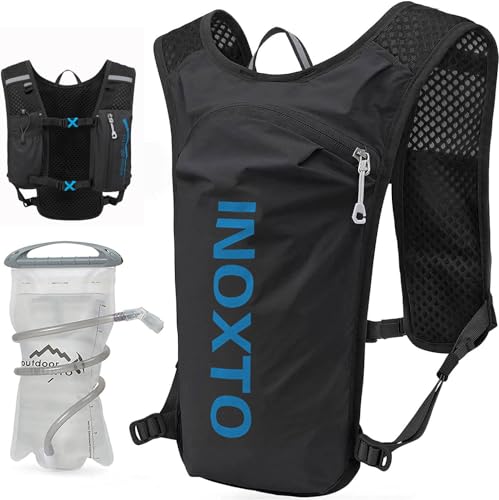
- 140-gram design minimizes carried weight
- 1.5L bladder with two bottle pockets
- Breathable mesh and adjustable hip and shoulder straps
Best For: Runners and cyclists wanting a low-bulk pack for moderate outings
Trail-Ready Value – Teton Oasis Trailrunner Hydration Backpack
The Teton Oasis Trailrunner is a practical choice among lightweight hydration packs for day hikes, rides, and other outdoor outings. It includes a 2L bladder, six pockets, adjustable athletic-fit straps, and a sewn-in rain cover for added versatility.
Best For: Day hikers and active users who want organized storage, a comfortable fit, and included weather protection.
Pros:
- Includes a 2L bladder with a wide opening for ice and easier cleaning.
- Low-profile fit, padded straps, and adjustments designed for men, women, and youth.
- Six pockets, helmet bungee, weather-guarded zipper pocket, and sewn-in rain cover.
Cons:
- The listed capacity is 2L, so it offers less water than the 3L options here.
- Its feature-rich daypack design may be more storage than runners need.
With a 14.4-ounce listed weight and useful day-hike features, the Trailrunner balances portability with organization. It is a strong all-around pick when comfort and rain readiness matter.
Rugged 3L Carry – MARCHWAY Tactical MOLLE Hydration Pack
The MARCHWAY Tactical pack is built for users who prioritize durability and capacity in lightweight hydration packs. Its 3L reservoir, 1000D water-repellent nylon, stabilizing waist and sternum straps, and MOLLE webbing suit demanding outdoor use.
Best For: Cyclists, hikers, trainees, and outdoor users who need a rugged 3L system with expandable gear attachment.
Pros:
- Includes a 3L TPU bladder with a wide opening, quick-release valve, and rotating bite valve.
- 1000D nylon, impact-resistant buckles, military-grade webbing, and SBS zippers support hard use.
- Waist, sternum, and shoulder adjustments help stabilize the load and limit bounce.
Cons:
- At 2 pounds, it is substantially heavier than the other listed packs.
- Only two external pockets are listed, limiting small-item organization.
This pack trades ultralight weight for rugged construction and a larger reservoir. Choose it when durability, stability, and modular MOLLE storage outweigh the need for a featherlight carry.
Easy-Sip Lightweight Pick – Vibrelli Hydration Backpack
The Vibrelli Hydration Backpack is a streamlined option for runners, cyclists, and other users comparing lightweight hydration packs. It weighs 14 ounces, includes a 2L bladder, and uses an easy-twist bite valve designed for quick flow and leak control.
Best For: Runners and cyclists seeking a light, adjustable pack with multiple pockets and a taste-free bladder.
Pros:
- Listed weight is just 14 ounces for a relatively light carry.
- 2L bladder uses medical-grade, BPA-free, and PVC-free materials.
- Easy-twist bite valve locks to help prevent dripping and provides fast flow.
Cons:
- The 2L reservoir provides less capacity than the MARCHWAY 3L pack.
- The notes do not specify a rain cover or waterproof construction.
With six pockets, adjustable sizing, and a five-year manufacturer warranty, the Vibrelli offers a balanced setup for everyday training and recreation. It is especially appealing when low weight and straightforward hydration are priorities.
Ultralight Storage Vest – N NEVO RHINO 12L Hydration Backpack
The N NEVO RHINO pack stands out among lightweight hydration packs with an 8.5-ounce listed weight and a roomy 12L pack capacity. It combines a 2L bladder with breathable mesh, adjustable straps, waterproof nylon, and several small-item storage areas.
Best For: Runners, cyclists, hikers, and event-goers who want very low weight with space for more than water.
Pros:
- At 8.5 ounces, it is the lightest listed pack in this roundup.
- 12L pack capacity provides room for clothing, snacks, and other essentials.
- Waterproof, tear-resistant nylon and breathable air mesh support varied outdoor use.
Cons:
- It includes a 2L bladder rather than a larger 3L reservoir.
- The listed pocket information is inconsistent, so storage layout may require verification.
This model is a compelling choice when minimizing pack weight matters without giving up day-use storage. Its adjustable fit and multiple mesh compartments also make it practical for active outings beyond short runs.
Best Lightweight Pick – Unigear 2L Hydration Pack
If you want lightweight hydration packs for running, cycling, or day hikes, the Unigear offers a compact 2-liter setup weighing about 1.1 pounds with water included. Adjustable shoulder, chest, and waist straps help limit bounce, while the splash-resistant nylon adds basic protection in light rain.
Best For: Runners, cyclists, and hikers who want a compact, aerodynamic pack with simple storage.
Pros:
- Includes a 2-liter BPA-free bladder with a screw cap that can accommodate small ice cubes.
- Adjustable chest and waist straps fit chest sizes from about 27 to 50 inches.
- Compact design and one front utility pocket keep the load streamlined.
- Lightweight, splash-resistant nylon construction weighs approximately 1.1 pounds with the bladder.
Cons:
- Only one listed pocket provides limited room for extra gear.
- Its compact storage is better suited to essentials than bulky layers or equipment.
The Unigear is a practical choice when low weight, stability, and minimal storage matter more than carrying capacity. Its replaceable bladder and straightforward strap system make it well suited to active outings.
Best for Organized Carry – Maelstrom 2L Hydration Backpack
Among lightweight hydration packs, the Maelstrom combines a 2-liter BPA-free PEVA bladder with four storage pockets and a ventilated back panel. At about 1.1 pounds, it adds organization without becoming a heavy option for hikes, runs, and cycling trips.
Best For: Outdoor users who need hands-free hydration, multiple pockets, and helmet-carrying capability.
Pros:
- Four storage pockets provide more organization than a minimal racing pack.
- Aluminum-lined bladder sleeve is designed to provide insulated cooling.
- External clips offer a place to secure a cycling helmet.
- Reflective strips improve visibility for activities in lower light.
Cons:
- The listed chest-strap range begins at 22.4 inches and extends to 61 inches, so fit should be checked carefully.
- Its extra pockets and helmet clips may be unnecessary for users seeking the simplest possible pack.
The Maelstrom is a well-rounded option for people who want lightweight hydration with useful organization and visibility features. Its adjustable fit and ventilated design also support longer outdoor sessions.
Best Storage Capacity – MIYCOO 10L Hydration Backpack
The MIYCOO stands out among lightweight hydration packs for its 10-liter overall capacity and five-pocket layout. It includes a 2-liter BPA-free bladder, breathable mesh shoulder straps, and an insulated bladder compartment designed to help keep water cold for up to four hours.
Best For: Hikers, cyclists, and runners who need hydration plus room for clothing, snacks, electronics, and small gear.
Pros:
- Five pockets include a main compartment, bladder pocket, front zipper pocket, and two shoulder-strap phone pockets.
- 10-liter capacity provides more room than a minimalist hydration vest.
- Wide-opening bladder is designed for easier filling and cleaning.
- Insulated bladder pocket can accommodate an ice pack to help keep water cold for up to four hours.
Cons:
- At 0.67 kg, it is heavier than the most minimal options in this group.
- Its larger capacity may feel excessive for short runs carrying only water and keys.
The MIYCOO is the better fit when “lightweight” still needs to include meaningful cargo space. Its dual phone pockets and insulated bladder compartment make it particularly practical for longer outings.
Insulated Marathon Pick – KUYOU 2L Lightweight Hydration Vest
For shoppers comparing lightweight hydration packs, the KUYOU running vest offers a compact, aerodynamic design with a 2-liter BPA-free PEVA bladder. Its insulation is designed to keep water at a suitable temperature for up to four hours, making it practical for longer workouts and outdoor sessions.
Best For: Runners, cyclists, hikers, and marathon trainees who want a streamlined 2-liter pack with visibility features.
Pros:
- Compact, lightweight design intended to minimize wind drag.
- 2L food-grade PEVA bladder with a high-flow bite valve.
- Insulation is designed to maintain water temperature for up to four hours.
- Reflective strips and an emergency whistle support low-light and emergency preparedness.
Cons:
- Its listed capacity is limited to 2 liters, with no larger storage volume specified.
- The listed weight is 1.1 pounds, so it is not the lightest option in this roundup.
The KUYOU is a focused choice for hydration-first outings. Choose it if a form-fitting profile, insulated bladder, and reflective safety details matter more than extensive cargo storage.
Gear-Carrying Adventure Pick – IX INOXTO 2L Hydration Pack
The IX INOXTO stands out among lightweight hydration packs for combining a 2-liter bladder with substantial daypack storage. It weighs 15.52 ounces and includes breathable mesh, adjustable chest and waist straps, reflective trim, and multiple pockets for short trips and active adventures.
Best For: Trail runners, hikers, cyclists, and climbers who need hydration plus room for essentials and outdoor gear.
Pros:
- Lightweight 15.52-ounce construction with a listed 12-liter capacity.
- 2L bladder includes a large opening, switch valve, and cover cap for leak resistance.
- Eight pockets provide space for items such as a phone, keys, wallet, sunscreen, and towel.
- Breathable mesh, adjustable chest and waist straps, and reflective trim support comfort and visibility.
Cons:
- The larger storage capacity may feel less minimal than a racing-focused hydration vest.
- More features and pockets can add bulk compared with simpler hydration-only designs.
This is the most versatile option here for carrying more than water. It makes sense for users who want a lightweight pack for short trips, with added storage for clothing, accessories, or selected outdoor equipment.
Ultralight Running Pick – INOXTO 1.5L Hydration Vest
For runners prioritizing minimal weight, this INOXTO vest is one of the lightest lightweight hydration packs in the group. It weighs 140 grams and carries a 1.5-liter bladder, while its ventilated mesh, adjustable straps, front pockets, and reflective trim support efficient training and racing.
Best For: Road runners, cyclists, and hikers who prefer an ultralight, low-bulk vest for shorter or moderate outings.
Pros:
- Very light 140-gram design for reduced carrying weight.
- 1.5L main hydration capacity plus two side pockets for 250 ml PET bottles.
- Ventilated mesh helps promote airflow across the back.
- Adjustable shoulder and hip straps, front storage, and reflective trim improve practicality.
Cons:
- The 1.5-liter bladder holds less water than the 2-liter options in this roundup.
- Its compact design offers less overall storage, with three listed pockets.
- The product notes state that it is not intended for children 12 and under.
The INOXTO is a strong fit when low weight and stability are the main priorities. Its smaller reservoir and compact storage favor running and streamlined rides over long outings requiring extensive supplies.
How We Picked the Best Lightweight Hydration Packs
We focused on the features that matter most when a hydration pack is worn for extended periods: overall weight, bladder capacity, fit adjustment, storage, ventilation, drinking access, and stability during movement. The selection includes compact running vests, multipurpose daypacks, and more structured designs for hiking or cycling.
We also considered practical details such as insulated compartments, reflective elements, bite-valve access, chest or sternum straps, and compatibility with different body sizes. Because intended use varies, no single pack is ideal for every buyer.
Quick Comparison
| Best For | What to Prioritize | Typical Capacity |
|---|---|---|
| Trail running | Minimal bounce, breathable vest fit, easy-access storage | 1.5–2L |
| Hiking | Comfortable suspension, extra gear storage, durable materials | 2–3L |
| Cycling | Low-profile shape, secure straps, hose routing | 1.5–3L |
| Long outdoor days | Larger compartments and higher water capacity | 2–3L |
Key Buying Factors for Lightweight Hydration Packs
Water Capacity
A 1.5L bladder keeps weight and bulk down for shorter runs, while a 2L bladder is a versatile choice for most hikes, rides, and workouts. Choose 3L when refill points are limited or you expect to be outside for several hours. Remember that water alone weighs about 1 kilogram per liter.
Fit and Stability
Look for adjustable shoulder, chest, or waist straps that hold the pack close without restricting breathing. A running vest should stay stable when you accelerate, descend, or move over uneven ground. A daypack-style design may offer more structure but can feel less streamlined.
Storage and Organization
Check whether the pockets fit your phone, keys, snacks, a light layer, and other essentials. Larger packs are useful for hiking, but runners may prefer front-facing stretch pockets that can be reached without removing the pack.
Ventilation and Insulation
Breathable back panels and shoulder straps help reduce heat buildup. An insulated bladder compartment can keep water cooler, which is particularly useful in warm weather, although insulation may add some weight and bulk.
Bladder and Bite Valve Design
Prioritize a wide opening for easier cleaning and refilling, a secure closure, and a hose that stays accessible. A high-flow bite valve can make drinking easier while moving. Confirm that replacement bladders and hoses are available if you expect frequent use.
Who Should Buy Which Lightweight Hydration Packs?
For Runners and Racers
Choose a compact vest with a close fit, minimal bounce, reflective details, and quick-access pockets. A 1.5L or 2L reservoir is usually sufficient for training and shorter races.
For Hikers and Day Users
Select a pack with a 2L or 3L bladder and enough room for food, layers, navigation tools, and personal items. A slightly larger design is worthwhile when comfort and carrying flexibility matter more than minimum weight.
For Cyclists
Look for a low-profile pack with secure chest straps, dependable hose routing, and storage that does not interfere with riding posture. A 2L reservoir is a practical middle ground for most rides.
For Occasional Outdoor Use
A simple 2L hydration backpack offers the best balance of capacity, convenience, and versatility. Focus on adjustability, easy cleaning, and enough storage for the items you normally carry rather than choosing the lightest option alone.