The best camera tripod for hiking should give you reliable stability without becoming a burden on the trail. Weight, packed size, setup speed, and terrain-friendly versatility matter just as much as maximum height.
We’ve gathered 10 lightweight travel tripods and hybrid supports for photographers, vloggers, and outdoor travelers. Use the guide below to match features, portability, and budget to the way you shoot.
Best 10 Camera Tripods for Hiking Picks for 2026
Lightweight Carbon Trail Pick
K&F Concept 60-Inch Carbon Fiber Tripod

- 2.2-pound carbon-fiber build
- Folds to 13.8 inches
- Detachable monopod and low-angle column
Best For: Hikers wanting a lightweight full-size tripod
Practical Budget Travel Tripod
NEEWER Basics TP12 Travel Tripod

- 11-pound load capacity
- Reaches 66.5 inches
- Includes phone holder and Arca-type QR system
Best For: Travelers using both cameras and smartphones
High-Capacity Monopod Convertible
SmallRig CT-10 Aluminum Tripod & Monopod

- 33-pound vertical payload rating
- Converts to a monopod
- 71-inch maximum height
Best For: Hikers carrying heavier camera setups
All-in-One Trail Creator Stick
TELESIN TrekShot Carbon Fiber Tripod Pole

- 0.84-pound carbon-fiber body
- Works as selfie stick, tripod, and hiking-style pole
- Designed for phones and action cameras
Best For: Lightweight trail vlogging and solo travel content
Best Lightweight Pick
K&F Concept 64-Inch Travel Tripod

- 2.53-pound aluminum design folds to 15.5 inches
- 36mm ball head supports up to 17.6 pounds
- Reversible center column enables low-angle shots
Best For: Landscape hikers prioritizing portability and flexible setup
Best Tall Multipurpose Option
NEEWER Basics TP14B Travel Tripod
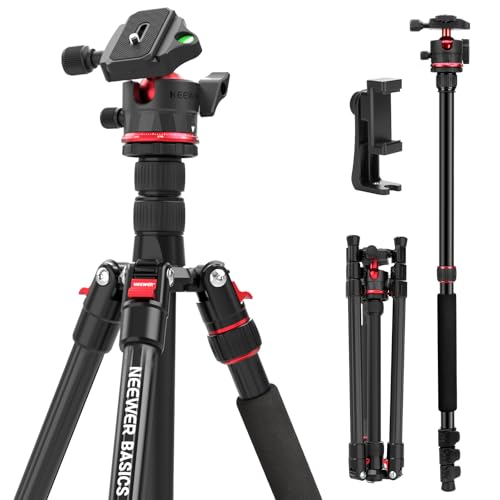
- Reaches 72 inches and folds to 17 inches
- Converts to a monopod for video or content creation
- Includes phone holder and supports up to 13.2 pounds
Best For: Hikers who value maximum height and monopod versatility
Trail-Ready Versatility

- 75-inch height with compact 14.17-inch fold
- Converts to a monopod or selfie stick
- Adjustable legs suit uneven outdoor terrain
Best For: Hikers wanting a tall, multifunctional tripod for cameras and phones
Ultralight Simplicity

- Lightweight 1.23-pound aluminum design
- Adjusts from 16.1 to 50 inches
- Quick-release plate and three-way head
Best For: Hikers carrying lightweight cameras who value portability and easy setup
High-Reach Travel Control

- 75-inch reach with a compact 19.6-inch fold
- Works with cameras, phones, and tablets
- Includes pan head, bubble level, and Bluetooth remote
Best For: Outdoor creators needing height and hands-free control in a travel-friendly format
Lightweight Carbon Trail Pick – K&F Concept 60-Inch Carbon Fiber Tripod
For hikers who want full-size support without a heavy pack, this carbon-fiber option is a strong choice among camera tripods for hiking. It weighs 2.2 pounds, folds to 13.8 inches, and offers a useful height range for landscapes, travel, and low-angle shots.
Best For: Hikers and photographers who prioritize low weight, compact packing, and versatile camera positioning.
Pros:
- Lightweight carbon-fiber construction weighs about 2.2 pounds.
- Five-section legs adjust from 18 to 60 inches and fold compactly.
- Detachable monopod can also function as a trekking pole.
- Reversible center column supports low-angle and macro photography.
Cons:
- Its maximum load is substantial, but larger setups may still require careful balance.
- The monopod and extra features may be more than casual hikers need.
This is the most hiking-oriented traditional tripod here: light enough for wilderness trips while still providing a 60-inch working height, panoramic ball head, and low-angle flexibility.
Practical Budget Travel Tripod – NEEWER Basics TP12 Travel Tripod
The NEEWER Basics TP12 keeps the essentials straightforward for hikers seeking camera tripods for hiking at a practical price. Its aluminum construction supports up to 11 pounds, while the compact folded profile and included phone holder suit mixed camera-and-smartphone trips.
Best For: Travelers and outdoor creators who want a simple, versatile tripod for cameras and phones.
Pros:
- Supports up to 11 pounds while weighing about 2.9 pounds.
- Adjusts from 20.1 to 66.5 inches for varied shooting heights.
- Includes an Arca-type QR system and universal phone holder.
- Ball head supports panoramic movement and 90-degree vertical shooting.
Cons:
- Aluminum and plastic construction is heavier than the carbon-fiber alternatives.
- It is not water resistant.
Choose this model when broad device compatibility matters more than minimum pack weight. It is a capable general-purpose option for hiking photos, phone content, and travel video.
High-Capacity Monopod Convertible – SmallRig CT-10 Aluminum Tripod & Monopod
The SmallRig CT-10 is built for hikers carrying heavier camera equipment and wanting a tripod that can switch roles. Among camera tripods for hiking, it stands out for its 33-pound vertical payload rating, 71-inch maximum height, and conversion to a monopod.
Best For: Outdoor photographers who need a tall, sturdy aluminum tripod with monopod flexibility.
Pros:
- Aluminum construction supports up to 33 pounds vertically.
- Converts from tripod to monopod for travel and hiking use.
- Adjusts from 16 to 71 inches with quick-release flip locks.
- 360-degree ball head, inverted center column, and accessory threads add flexibility.
Cons:
- At 3.4 pounds and 16.9 inches folded, it is less packable than lighter options.
- Telephoto lenses may require an additional tripod or lens mount for balance.
- It is not water resistant.
This is the stability-focused choice rather than the ultralight one. Its added weight makes sense for larger setups, tall compositions, and photographers who value a monopod conversion.
All-in-One Trail Creator Stick – TELESIN TrekShot Carbon Fiber Tripod Pole
For casual trail content rather than heavy camera work, the TELESIN TrekShot combines a selfie stick, compact tripod, and hiking-style pole. Its 0.84-pound carbon-fiber body makes it especially appealing to creators comparing camera tripods for hiking who mainly use phones or action cameras.
Best For: Solo travelers, vloggers, and hikers recording smartphone or action-camera content.
Pros:
- Very light at about 0.84 pounds.
- Functions as a selfie stick, tripod, and hiking-style walking pole.
- Extends from 34.6 to 58.3 inches with flip locks.
- Supports compatible phones and several action-camera systems.
Cons:
- It is not intended as a heavy-duty trekking pole or load-bearing mountaineering tool.
- Tripod use should be limited to stable ground and avoided in windy conditions.
- Some action cameras require a separate adapter.
This is the lightest and most multifunctional option, but it should not replace a full-size camera tripod for heavier cameras or demanding conditions. It is best viewed as a content-creation accessory for light outdoor use.
Best Lightweight Pick – K&F Concept 64-Inch Travel Tripod
For hikers choosing camera tripods for hiking, the K&F Concept 64-inch model balances a useful maximum height with a relatively light 2.53-pound weight. Its four-section aluminum legs fold to 15.5 inches, making it practical for carrying on longer trails.
Best For: Hikers who want a lightweight tripod with a full-height setup and flexible landscape shooting controls.
Pros:
- Lightweight 2.53-pound design folds to 15.5 inches.
- 36mm ball head supports up to 17.6 pounds and offers 360-degree panning.
- Quick flip locks and an included phone holder simplify setup and mobile shooting.
- Reversible or short center-column options support low-angle photography.
Cons:
- Aluminum construction is not as light as a comparable carbon-fiber tripod.
- It is not water resistant, so wet-weather protection is needed.
Its combination of portability, load capacity, and low-angle flexibility makes this a well-rounded choice for landscape-focused hiking trips, especially when you want room for a DSLR or mirrorless setup.
Best Tall Multipurpose Option – NEEWER Basics TP14B Travel Tripod
The NEEWER Basics TP14B is a practical option among camera tripods for hiking when height and versatility matter. It reaches 72 inches, folds to 17 inches, and can convert into a monopod for photographers who want one support system for stills, video, and content creation.
Best For: Hikers and creators who need a tall tripod that can also serve as a monopod or phone stand.
Pros:
- Extends to 72 inches while folding to 17 inches.
- Converts to a monopod and includes a weight hook and nonslip feet.
- 360-degree ball head supports panorama and 90-degree tilt adjustments.
- Includes a phone holder and supports up to 13.2 pounds.
Cons:
- At about 3.2 pounds, it is heavier than the lightest hiking-oriented option here.
- It is not water resistant.
The extra height is useful for standing compositions and video, while the monopod conversion adds flexibility. However, hikers counting every ounce may prefer a lighter model for extended climbs.
Best High-Capacity Compact Pick – K&F Concept 63-Inch Aluminum Tripod
For hikers carrying heavier camera gear, this K&F Concept model stands out among camera tripods for hiking with a 22-pound stated load capacity and a 40mm ball head. It still folds to 18 inches with the head attached, offering a useful balance between support and packability.
Best For: Hikers carrying mirrorless or DSLR equipment who want strong support in a compact aluminum design.
Pros:
- Supports up to 22 pounds for heavier camera and lens combinations.
- Folds to 18 inches with the ball head and weighs about 2.6 pounds.
- Five-section legs adjust from 17.3 to 64 inches.
- 40mm ball head provides 360-degree panning and 90-degree vertical tilt.
Cons:
- The supplied notes list a 22-pound capacity, while the product title emphasizes a compact travel design; users should still balance larger setups carefully.
- It is not water resistant.
- The quick-release screw may require a coin, flathead screwdriver, or wrench for secure tightening.
This is the strongest choice of the three for gear capacity without a major portability penalty. Its compact folded length and low-angle column make it well suited to demanding landscape and travel compositions.
Trail-Ready Versatility – XXZU 75" Camera Tripod
For hikers who want one setup for landscapes, selfies, and low-angle shots, the XXZU is a versatile choice among camera tripods for hiking. It reaches 75 inches, folds to 14.17 inches, and weighs 2.18 pounds, while its adjustable legs are designed for uneven terrain.
Best For: Hikers and outdoor creators who want a tall tripod with phone support, monopod functionality, and flexible shooting angles.
Pros:
- Extends to 75 inches and folds compactly for travel.
- Adjustable leg angles and lengths help it stand on rocky trails and stairs.
- Detachable center column converts it into a monopod or selfie stick.
- Includes a phone holder, remote, carrying bag, and accessory mount.
Cons:
- At 2.18 pounds, it is heavier than minimalist hiking tripods.
- Maximum load varies by shooting position, from 3 pounds at a 45-degree tilt to 8 kilograms vertically.
- Its aluminum construction is not as light as a compact travel alternative.
The XXZU stands out when hiking photography calls for height and adaptability rather than the lowest possible pack weight. Its leg positioning, ball head, and detachable center column give it useful flexibility for varied outdoor setups.
Ultralight Simplicity – Amazon Basics 50-Inch Tripod
The Amazon Basics 50-inch model is a straightforward option for hikers prioritizing low carry weight and simple setup. At 1.23 pounds, it is notably portable, with lever-lock legs, a quick-release plate, and a three-way head for basic landscape or portrait framing.
Best For: Day hikers, campers, and travelers carrying lightweight cameras or compact equipment.
Pros:
- Weighs just 1.23 pounds and includes a storage bag.
- Adjusts from 16.1 to 50 inches for varied shooting heights.
- Three-way head supports tilt, swivel, portrait, and landscape shooting.
- Built-in bubble level and quick-release plate simplify positioning and transitions.
Cons:
- Not recommended for heavy high-end DSLRs, long lenses, or large telescopes.
- Equipment weight should not exceed 4.4 pounds.
- It is not water resistant.
For uncomplicated trail photography, this tripod keeps bulk and weight down while covering the essential adjustments. Its 50-inch maximum height and 4.4-pound limit make it better suited to lighter camera kits than demanding professional setups.
High-Reach Travel Control – K&F CONCEPT 75-Inch Tripod
The K&F CONCEPT combines a 75-inch maximum height with a compact 19.6-inch folded size, making it a capable choice among camera tripods for hiking and travel. Its 2.6-pound aluminum build includes a five-section design, three-way pan head, bubble level, phone and tablet holder, and Bluetooth remote.
Best For: Outdoor photographers and content creators who need extended height plus phone, tablet, and camera compatibility.
Pros:
- Extends from 18.9 to 75 inches and folds to about 20 inches.
- Supports cameras, smartphones, and tablets with included accessories.
- Three-way pan head, 360-degree rotation, and bubble level provide composition control.
- Includes a Bluetooth remote for hands-free photos and video recording.
Cons:
- At 2.6 pounds, it may be more weight than ultralight hikers want to carry.
- It is not water resistant.
- The five-section design favors portability but adds more setup sections to adjust.
This K&F CONCEPT model is a strong middle ground for hikers who want substantial height without carrying a full-size studio tripod. Its broad device compatibility and remote make it particularly useful for solo shooting, vlogging, and group photos outdoors.
How We Picked the Best Camera Tripods for Hiking
We focused on portable models suited to outdoor photography, travel, and hiking. The selection includes carbon-fiber and aluminum tripods, compact travel designs, detachable monopods, and a three-in-one hiking-stick tripod. We considered listed weight, folded size, maximum height, head design, quick-release functionality, and the practical flexibility each model offers on uneven ground.
Because hiking gear is carried for long periods, we gave particular attention to portability and setup convenience rather than choosing only the tallest or most heavily built options. Always verify current specifications and included accessories before buying, since configurations can vary by listing.
Quick Comparison
| Best For | Look For | Likely Trade-Off |
|---|---|---|
| Lightweight hiking kit | Carbon fiber or compact aluminum legs | Less resistance to strong wind |
| Maximum versatility | Detachable monopod or multi-function design | More parts and setup choices |
| Low-cost travel use | Aluminum construction and quick-release plate | Lower vibration control |
| Vlogging and trail content | Selfie-stick, tripod, and remote functions | Usually limited camera payload |
| Tall shooting positions | Extended center column and longer legs | Larger packed footprint |
Key Buying Factors for Camera Tripods for Hiking
Weight and Packed Size
A tripod that stays at home is not useful. Compare the listed carry weight and folded length with your backpack and planned distance. Carbon fiber generally reduces weight and can feel more comfortable in cold conditions, while aluminum models often cost less.
Stability on Uneven Ground
Look for independently adjustable leg sections, secure leg locks, and feet that grip reliably on dirt or rock. A tall tripod is not automatically more stable; keep the center column low when conditions are windy, and avoid extending every section unless necessary.
Camera Compatibility and Payload
Check the manufacturer’s stated load capacity against your camera, lens, and accessories—not just the camera body. A large telephoto lens or external monitor needs more support than a compact mirrorless setup or phone.
Head, Controls, and Setup
Ball heads allow fast composition changes, while a dependable quick-release plate speeds up transitions between handheld and tripod shooting. Confirm that the plate fits your camera workflow and that knobs can be operated easily with cold or gloved hands.
Monopod and Hybrid Features
A detachable monopod can reduce weight when you need quick support, while a hiking-stick tripod or selfie-stick design may suit casual video and phone photography. These options improve versatility but may not match a dedicated tripod for long exposures or heavy lenses.
Who Should Buy Which Camera Tripods for Hiking?
Choose Carbon Fiber for Long Hikes
Carbon-fiber models are a strong choice for photographers who prioritize lower carry weight and regularly spend hours on the trail.
Choose Aluminum for Value and General Travel
Aluminum tripods suit beginners and budget-conscious travelers who want a conventional camera support with useful height at a lower price.
Choose a Monopod Hybrid for Flexibility
A detachable monopod is useful when you alternate between landscape photos, quick wildlife support, and handheld travel shooting.
Choose a Selfie-Stick Tripod for Content Creation
Vloggers, phone photographers, and casual hikers may prefer a compact three-in-one design with a remote, provided their camera setup is lightweight.