Portable solar panels can keep phones, cameras, lights, and power stations charged when you are camping away from reliable outlets. The right choice depends on your power needs, campsite conditions, and how much weight and setup you are willing to manage.
We compared 10 camping-ready options across output, portability, connectivity, weather resistance, and compatibility so you can choose a panel that fits your trips instead of paying for capacity you will not use.
Best 10 Portable Solar Panels for Camping Picks for 2026
Best Universal Connector
ZOUPW 100W Foldable Solar Panel

- 100W output with 23.5% efficiency
- Five-in-one cable for broad compatibility
- IP67 ETFE panel with direct USB charging
Best For: Campers using different power-station brands
Best Lightweight Option
FlexSolar 40W Foldable Solar Charger

- Weighs only 1.76 pounds
- USB-C, USB-A, and DC outputs
- Folds to about 8 by 11 inches
Best For: Backpackers charging personal electronics
Best High-Output Panel
Renogy 200W Portable Solar Panel

- 200W output with 25% efficiency
- 45W USB-C PD and dual USB-A ports
- Four kickstands for multiple angles
Best For: RV campers and higher-demand off-grid setups
Best Small-Device Charger
SOLUPUP 30W Foldable Solar Panel

- Lightweight 2.4-pound foldable design
- USB-A and USB-C dual charging
- Includes carabiners and adjustable stand
Best For: Hikers charging phones and power banks
Compact High-Output Pick
Ecosonique 200W Foldable Solar Panel
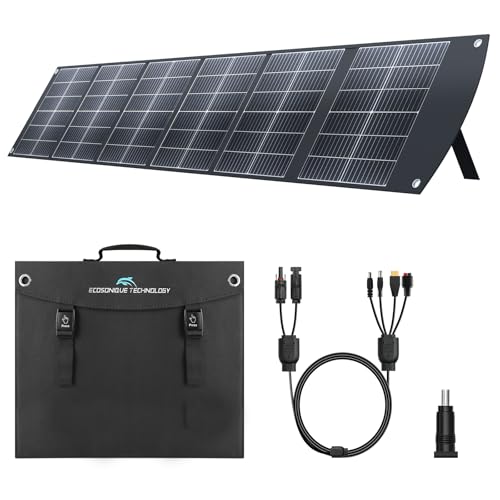
- Six-fold 200W design weighs 11 pounds
- Includes several power-station adapter cables
- USB-C and USB-A charging outputs
Best For: Campers needing versatile 200W charging in a compact foldable format
Lightweight Weatherproof Pick
FlexSolar 100W Foldable Charger

- Weighs 4.1 pounds with a carry bag
- Offers DC, USB-C, and USB-A outputs
- IP67 water- and dustproof design
Best For: Lightweight camping and travel setups requiring versatile device charging
Maximum-Wattage Battery Kit
DOKIO 300W Foldable Solar Panel

- Highest rated output at 300W
- Includes a separate protective PWM controller
- Long cable and broad adapter selection
Best For: RV and 12V battery setups needing a complete higher-output kit
High-Output Pick
SOKIOVOLA 200W Foldable Solar Panel
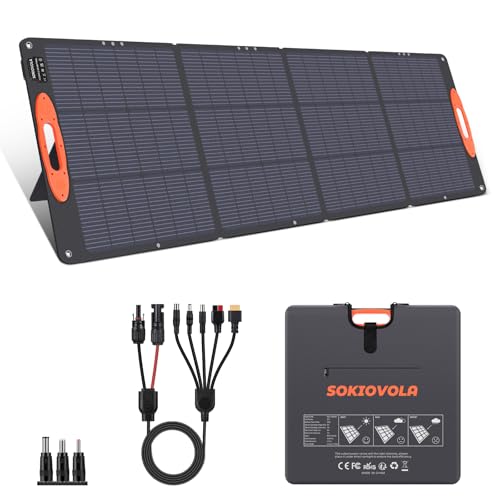
- 200W capacity and up to 25% efficiency
- Folds to 21 x 23 inches with carry handle
- Includes versatile 5-in-1 connector cable
Best For: RV camping and compatible power-station charging
Lightweight Value
DOKIO 100W Foldable Solar Panel Kit

- Weighs about 6 pounds
- Includes PWM controller and USB ports
- 3-meter cable allows flexible placement
Best For: Lightweight 12V battery and small-device charging
Maximum Charging Power

- 400W rated power with 23.4% efficiency
- Adjustable kickstands support setup flexibility
- MC4 connectivity for compatible power stations
Best For: High-demand RV and off-grid charging
Best Universal Connector – ZOUPW 100W Foldable Solar Panel
For campers who need flexible power-station compatibility, the ZOUPW 100W is a practical choice among portable solar panels for camping. Its 23.5% efficiency, adjustable kickstands, and included five-connector cable make it easy to position and connect at camp.
Best For: Camping, RV travel, overlanding, and emergency charging with multiple power-station brands.
Pros:
- 100W output with 23.5% high-efficiency monocrystalline cells.
- Five-in-one cable supports DC8020, XT60, Anderson, DC7909/8mm, and DC5521 connections.
- IP67 waterproof ETFE panel, foldable design, and adjustable kickstands.
- Built-in USB-C and dual USB-A ports can charge smaller devices directly.
Cons:
- At about 9.5 pounds, it is heavier than smaller backpacking panels.
- Power-station charging speed is limited by the station’s maximum input.
- The panel folds compactly but is still relatively large for lightweight hiking.
The ZOUPW stands out when connector flexibility matters. It offers useful direct-device charging and outdoor protection, but check your power station’s input limits before buying.
Best Lightweight Option – FlexSolar 40W Foldable Solar Charger
The FlexSolar 40W is a compact option for portable solar panels for camping when packability matters more than high output. It folds to roughly 8 by 11 inches, weighs 1.76 pounds, and provides USB-C, USB-A, and DC outputs.
Best For: Backpacking, mobile camps, emergency kits, and charging phones, tablets, power banks, or small power stations.
Pros:
- Very light 1.76-pound foldable design.
- 24% conversion efficiency with ETFE weather-resistant construction.
- USB-C PD2.0 and USB-A QC3.0 ports support fast charging.
- Includes two carabiners for convenient attachment.
Cons:
- 40W capacity is better suited to small devices than high-capacity power stations.
- Using multiple ports may reduce charging performance compared with single-port use.
- The junction box is not fully waterproof and should be protected during heavy rain.
Choose the FlexSolar when low weight and small folded dimensions are priorities. Its output range suits personal electronics, while the weatherproof panel still requires care around the junction box.
Best High-Output Panel – Renogy 200W Portable Solar Panel
For campers building a higher-capacity setup, the Renogy 200W delivers more rated power than most portable solar panels for camping. Its 25% efficiency, four positioning angles, and USB-C PD output make it suitable for power stations and several everyday devices.
Best For: RV camping, blackout backup, off-grid use, and charging compatible power stations or larger electronics.
Pros:
- 200W rated output with 25% efficiency from N-Type cells.
- USB-C PD up to 45W plus dual USB-A ports for direct charging.
- Four kickstands provide 40°, 50°, and 60° positioning options.
- Magnetic closure, accessory pouch, reinforced grommets, and a two-year warranty.
Cons:
- At 13.9 pounds, it is less convenient for extended backpacking.
- MC4 output only; the four-in-one adapter is sold separately.
- Compatibility depends on the power station meeting the required input specifications.
The Renogy is the strongest fit when charging capacity is the priority. It offers useful direct USB charging and flexible positioning, but confirm your station’s MC4 and input requirements before purchase.
Best Small-Device Charger – SOLUPUP 30W Foldable Solar Panel
The SOLUPUP 30W is designed for campers who mainly need to keep phones and power banks running. Among portable solar panels for camping, its 2.4-pound foldable build, carabiners, and dual USB outputs make it easy to carry and deploy.
Best For: Hiking, camping, and charging phones, tablets, power banks, and other small USB devices.
Pros:
- 23%+ claimed conversion efficiency from monocrystalline cells.
- USB-A and USB-C outputs can charge two devices simultaneously in suitable sunlight.
- Lightweight 2.4-pound design with carabiners and an adjustable stand.
- Smart-chip protections help guard against overcurrent, overvoltage, and short circuits.
Cons:
- 30W capacity is intended for small electronics rather than larger power stations.
- IPX5 protection is less extensive than fully waterproof panel ratings.
- Actual output varies with sunlight, temperature, angle, and cloud coverage.
The SOLUPUP is a convenient personal charging panel for active outdoor trips. Its compact carry format is appealing, but users needing faster power-station charging should consider a higher-wattage model.
Compact High-Output Pick – Ecosonique 200W Foldable Solar Panel
For campers who want substantial output without carrying a bulky setup, the Ecosonique 200W is a versatile option among portable solar panels for camping. Its six-fold design weighs 11 pounds, folds to about 18 by 16.3 inches, and includes multiple cables for connecting to popular power stations.
Best For: Campers, RV travelers, and emergency-preparedness users who need 200W output, broad connector compatibility, and direct USB charging.
Pros:
- Six-fold design and 11-pound weight make the 200W panel relatively easy to transport.
- Includes MC4, XT60, Anderson, DC7909, and DC5525 connection options.
- Offers USB-C PD3.0 up to 45W and USB-A QC3.0 outputs for compatible devices.
- Four adjustable kickstands and claimed 23.5% conversion efficiency help with panel positioning.
Cons:
- At 11 pounds, it is heavier than many lower-wattage camping panels.
- Power-station charging remains subject to the connected unit’s solar-input limits.
This is a strong middle ground for buyers who want more capacity than a 100W panel while still needing a foldable, cable-ready setup. The 12-month warranty and weather-resistant construction add practical reassurance for outdoor use.
Lightweight Weatherproof Pick – FlexSolar 100W Foldable Charger
The FlexSolar 100W prioritizes portability for hikers, campers, and road-trippers. At 4.1 pounds, it folds to roughly 13 by 10.4 by 2.2 inches and combines DC, USB-C, and USB-A outputs in a compact package for everyday off-grid charging.
Best For: Backpacking-style trips, camping kits, and travelers who value low weight, a carry bag, and IP67 water- and dustproof protection.
Pros:
- Weighs just 4.1 pounds and includes a carry bag for easier transport.
- Provides 100W DC, 45W USB-C PD3.0, and 18W USB-A outputs.
- Includes adapters for DC5521, DC7909, Anderson, and XT60 connections.
- IP67-rated construction is designed to resist water and dust exposure.
Cons:
- Its 100W maximum output is lower than the other panels in this roundup.
- The unfolded panel measures more than 45 inches across, so it still needs a suitable setup area.
Choose this model when carrying comfort and weather protection matter more than maximum wattage. Its combination of low weight, multiple outputs, and broad adapter support makes it a practical entry point for portable solar panels for camping.
Maximum-Wattage Battery Kit – DOKIO 300W Foldable Solar Panel
The DOKIO 300W is built for campers and RV users who want the highest rated output in this group. It folds to 19.3 by 37.4 inches, weighs 15.2 pounds, and includes a separate PWM charge controller, long cable, storage bag, and several battery and power-station adapters.
Best For: RVs, vans, 12V battery systems, and emergency backup setups where a complete panel-and-controller kit is more useful than the smallest packed size.
Pros:
- Its 300W rating provides the most nominal power among these options.
- Separate PWM controller includes reverse-polarity, overcharge, overload, and short-circuit protection.
- Nearly 10-foot cable allows the panel and controller or power station to be positioned separately.
- Includes SAE, XT60, alligator-clip, DC adapters, USB ports, a bag, and a manual.
Cons:
- At 15.2 pounds and 37.4 inches long when folded, it is less compact than the other picks.
- Some power stations may limit solar input to 100W or 200W, so the full 300W rating may not be usable with every unit.
- The fabric case is weather-resistant, but the notes advise avoiding prolonged heavy rain or strong sun exposure.
This kit makes the most sense for users with a compatible 12V battery or a power station that can accept higher solar input. Before buying, verify your equipment’s input limits and plan for the DOKIO’s larger folded footprint.
High-Output Pick – SOKIOVOLA 200W Foldable Solar Panel
For campers who need substantial charging capacity, the SOKIOVOLA 200W is a strong option among portable solar panels for camping. Its 25% efficiency rating, foldable design, and broad connector support make it suitable for power stations used at campsites, RVs, and off-grid setups.
Best For: RV camping, base camps, and users charging compatible portable power stations.
Pros:
- 200W output with up to 25% conversion efficiency.
- Folds to 21 x 23 inches and includes a magnetic carry handle.
- Includes a 5-in-1 cable supporting connectors such as XT60, Anderson, DC5521, DC7909, and DC8020.
- ETFE construction is described as IP68 waterproof and dustproof.
Cons:
- At about 16.3 pounds, it may be cumbersome for backpacking or long hikes.
- Actual charging may be limited by the connected power station’s maximum solar input.
This panel prioritizes charging capacity and compatibility over ultralight portability. Check your power station’s input limit before buying so its 200W capability matches your system.
Lightweight Value – DOKIO 100W Foldable Solar Panel Kit
The DOKIO 100W kit is a lightweight choice for portable solar panels for camping, especially when you need to support a 12V battery system. It folds to roughly 19 x 26 inches, includes a separate PWM controller, and offers USB ports for phones, lights, and other small devices.
Best For: Campers, van owners, and RV users who want a lighter panel for 12V batteries and basic device charging.
Pros:
- Weighs about 6 pounds and folds for easier transport and storage.
- Includes a 3-meter cable for positioning the panel in direct sunlight.
- Standalone PWM controller helps protect against reverse polarity, overcharge, overload, and short circuits.
- USB ports can power essential small devices when connected to a 12V battery.
Cons:
- Its 100W class output is lower than larger panels in this roundup.
- It is designed around 12V systems and may not suit every power station setup.
- Some power stations may cap the input at a lower wattage.
With its low weight and included controller, the DOKIO is practical for portable 12V charging. Verify your battery or power station requirements and input limits before purchasing.
Maximum Charging Power – 400W Foldable Solar Charger
For high-demand campsite power setups, this 400W model is one of the more powerful portable solar panels for camping. It combines monocrystalline cells, a stated 23.4% conversion efficiency, adjustable kickstands, and MC4 connectivity for compatible portable power stations.
Best For: RV camping, off-grid use, and emergency backup charging where a compatible power station can accept higher solar input.
Pros:
- High 400W rated power with 23.4% conversion efficiency.
- Foldable design includes adjustable kickstands for positioning.
- MC4 connectors support connection to many portable power stations.
- ETFE-laminated surface is designed for dust, heat, and outdoor exposure.
Cons:
- The supplied notes do not specify the folded dimensions or total weight.
- Its 400W potential depends on a power station that can accept the output.
- IP65 protection is weather-resistant but lower than the IP68 rating listed for the SOKIOVOLA panel.
This is the capacity-focused choice for users with power stations built for higher solar input. Confirm the station’s voltage and wattage limits, as well as storage space, before selecting it.
How We Picked the Best Portable Solar Panels for Camping
We focused on practical camping performance rather than wattage alone. Each selected panel was evaluated for rated output, folding design, charging connections, compatibility with common power stations, weather resistance, and setup requirements. We also considered whether a model is better suited to small USB devices, mid-sized battery generators, or larger off-grid systems.
Solar output varies with sunlight angle, shade, temperature, and cable losses, so rated wattage should be treated as a best-case figure. Panels with higher efficiency can produce more power in limited space, but they may cost more and weigh more.
Quick Comparison
- Small electronics: The 30W and FlexSolar 40W models are easier to carry and well suited to phones, tablets, lights, and smaller power banks.
- General power-station use: The ZOUPW and FlexSolar 100W panels offer a useful balance of portability and charging capacity.
- Higher-demand charging: The 200W, 300W, and 400W options are better for larger power stations, refrigerators, extended stays, and group camping.
- 12V battery projects: The DOKIO 100W and 300W kits are worth considering when a charge controller and battery-oriented setup are required.
Key Buying Factors for Portable Solar Panels for Camping
Output and Real-World Power
Choose wattage based on what you need to recharge and how quickly you need it done. A 30W to 100W panel is generally more manageable for personal electronics, while 200W or more makes sense for power stations supporting cooking appliances, cooling, or multiple devices. Allow extra capacity for cloudy conditions and imperfect positioning.
Connections and Compatibility
Check the input limits and connector type of your power station before buying. USB-A and USB-C are convenient for direct device charging, while DC, MC4, XT60, or Anderson connectors may be required for battery generators and 12V systems. Adapters do not always solve voltage or current mismatches.
Portability and Setup
Foldable panels are easier to store, but larger models can become bulky and heavy. Look for integrated stands, reinforced handles, manageable cable storage, and enough reach to place the panel in direct sun while keeping electronics in shade.
Weather Resistance
Water-resistant construction helps with damp grass and unexpected showers, but it does not mean every panel should be left outside indefinitely. Protect connectors, avoid standing water, and follow the manufacturer’s guidance for rain and storage.
Who Should Buy Which Portable Solar Panels for Camping?
Backpackers and minimalist campers should prioritize the lightest 30W or 40W options for phones, GPS units, and small battery packs. Car campers and weekend travelers will usually get the best balance from a 100W panel paired with a compatible power station. Families and longer-stay campers should consider 200W to 400W models when several devices or high-draw equipment must be supported. DIY battery users should choose a kit with the appropriate charge controller and verify battery chemistry, voltage, and connector requirements before connecting anything.