The best running waist packs for marathons keep hydration, fuel, identification, and your phone accessible without forcing you to carry a bulky vest or handheld bottle. The right design should stay secure as the miles add up while minimizing bounce, chafing, and distractions.
This roundup compares 10 options ranging from minimalist phone belts to hydration-focused packs with included flasks, helping you match capacity, fit, and race-day features to your training and marathon strategy.
Best 10 Running Waist Packs for Marathons Picks for 2026
Best Hydration Belt
Nathan Peak Running Hydration Waist Pack

- Includes an 18-ounce Speed Draw Flask
- Angled holder supports one-handed access
- Reflective trim and expandable zippered pocket
Best For: Low-profile hydration during marathon training and races
Best Race-Day Waist Pack

- Includes race bib keepers
- Side elastic loops add flexible storage
- Minimal one-pocket design
Best For: Streamlined marathon race-day carrying and bib organization
Best Gel-Carrying Belt
Fitletic Ultimate II Running Pouch
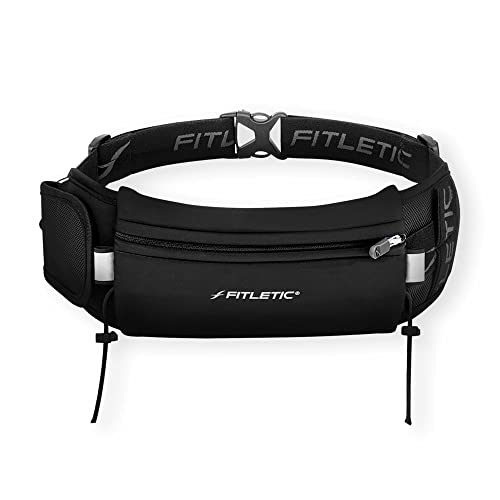
- Four dedicated gel loops
- Two pockets fit essentials and large phones
- Integrated bib toggles and adjustable 24–42-inch band
Best For: Marathons requiring accessible fuel and phone storage
Best High-Capacity Alternative
SWIFTVEST Running Hydration Vest
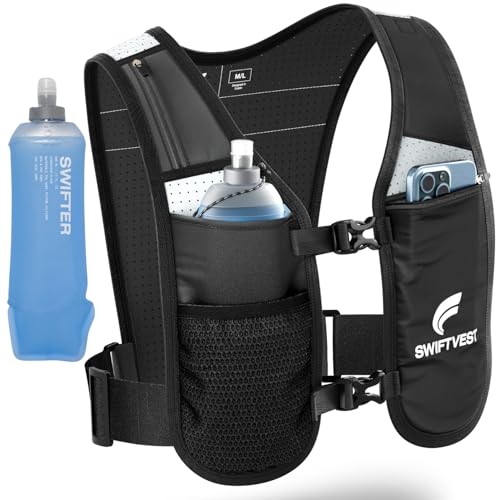
- Six pockets for phone, gels, and essentials
- Includes a 500 ml soft flask
- Adjustable, reflective, and water-resistant design
Best For: Long marathon efforts needing more storage than a waist pack
Best Bib-Friendly Pick
WATERFLY Marathon Running Belt
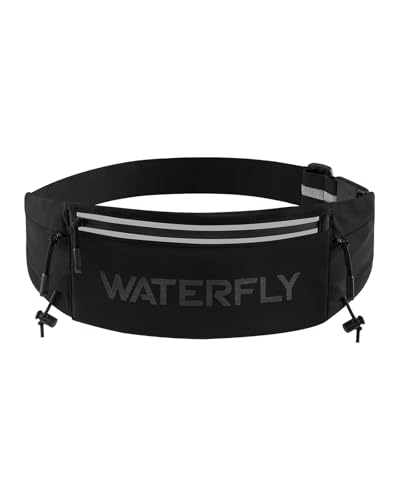
- Built-in clip for hole-punched race bibs
- Three pockets, including a phone compartment
- Breathable mesh with reflective details
Best For: Marathon and triathlon runners needing bib attachment
Best Everyday Essentials Belt

- Designed for phones, keys, cash, and cards
- Adjustable elastic strap for a secure fit
- Reflective strips and splash protection
Best For: Daily training with phone-sized essentials
Best Hydration Option
CamelBak Ultra Running Hydration Belt
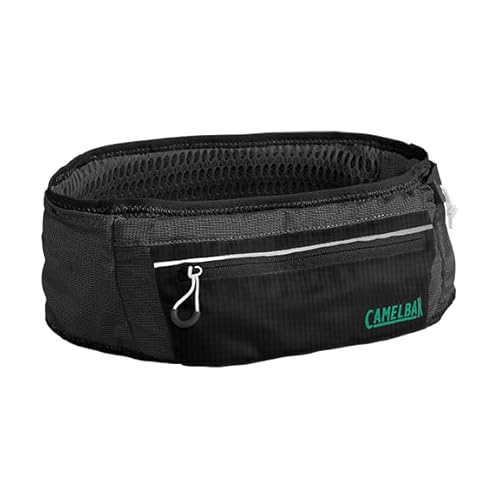
- Includes a collapsible 17-ounce flask
- Five pockets with 2.5-liter cargo capacity
- Breathable mesh and trekking pole carry
Best For: Long runs requiring hydration and extra gear storage
Best with Extra Features
AiRunTech Hydration Running Belt

- Two 175ml bottles included
- Large phone pocket and race bib toggles
- Adjustable, reflective, and designed to resist bouncing
Best For: Runners who want dual-bottle hydration and race-day storage
Best Minimalist Hydration Belt
Nathan Swift Plus Hydration Belt

- Includes an angled 10oz flask
- Zip pocket, gel loops, and trash stash
- Lightweight, water-resistant, and no-bounce
Best For: Runners carrying one flask and compact fueling essentials
Best Lightweight Storage
AONIJIE Hydration Running Belt

- 60g belt with a 250ml soft bottle
- Four pockets fit phones and small valuables
- Machine washable, quick-drying fabric
Best For: Runners wanting lightweight storage and a soft flask
Best Hydration Belt – Nathan Peak Running Hydration Waist Pack
For runners comparing running waist packs for marathons, the Nathan Peak combines an 18-ounce flask with compact storage. Its angled bottle holder, expandable zippered pocket, and reflective trim make it a practical option for carrying hydration and small essentials without a bulky design.
Best For: Marathon training and races where a handheld-free, single-bottle hydration setup is sufficient.
Pros:
- Includes an 18-ounce Speed Draw Flask with a push/pull race cap.
- Angled holder provides one-handed bottle access and helps keep the bottle in place.
- Expandable zippered stretch pocket protects essentials.
- Reflective details improve visibility in dim conditions.
Cons:
- One pocket limits organization for larger loads.
- The 18-ounce capacity may be modest for longer marathon efforts without refill access.
This is a focused hydration belt rather than a high-capacity pack. Choose it when low-profile comfort, quick bottle access, and essential-item storage matter most.
Best Race-Day Waist Pack – Nathan Marathon Pak 3.0
Among running waist packs for marathons, the Nathan Marathon Pak 3.0 is designed around race-day convenience. Its side elastic loops and race bib keepers give runners a simple way to carry essentials while keeping bib placement integrated into the pack.
Best For: Organized race-day use when bib attachment and a streamlined waist pack are priorities.
Pros:
- Includes race bib keepers for convenient bib placement.
- Side elastic loops provide additional flexible carrying options.
- One-size design offers a straightforward setup.
- Black and reflective silver colorway suits race-day visibility needs.
Cons:
- Supplied details list one pocket, so storage organization is limited.
- No hydration bottle is listed among the included components.
The Marathon Pak 3.0 is best viewed as a minimalist race accessory rather than a hydration-focused pack. It makes the most sense for runners who value bib keepers and compact carrying capacity.
Best Gel-Carrying Belt – Fitletic Ultimate II Running Pouch
For marathon runners who need quick access to fuel and valuables, the Fitletic Ultimate II is a versatile choice among running waist packs for marathons. It combines four gel loops, two pockets, bib toggles, and a snug adjustable band that fits 24 to 42 inches.
Best For: Endurance runners carrying a large phone, gels, identification, cards, and keys in one waist-worn system.
Pros:
- Four gel loops keep race fuel readily accessible.
- Inner and exterior pockets separate valuables and essentials.
- Integrated bib toggles simplify race-day setup.
- Designed to resist bouncing and chafing with an adjustable, close-fitting band.
Cons:
- It does not include a water bottle or built-in hydration reservoir.
- Hand-wash-only care requires extra maintenance.
- Its 24- to 42-inch fit range may not suit every runner.
This belt is particularly useful for runners who plan to use course hydration but want their gels and phone immediately available. Its dedicated loops and bib toggles give it a strong marathon-specific focus.
Best High-Capacity Alternative – SWIFTVEST Running Hydration Vest
Although it is a vest rather than a waist pack, the SWIFTVEST is worth considering alongside running waist packs for marathons when extra storage and hydration are important. It provides six pockets, a 500 ml soft flask, adjustable straps, and reflective details for a more comprehensive carry system.
Best For: Marathon runners who need more storage and hydration capacity than a compact waist pack typically provides.
Pros:
- Six pockets accommodate a phone, keys, gels, and other accessories.
- Includes a compressible 500 ml/17 oz soft flask.
- Adjustable chest and side straps support a snug fit.
- Reflective detailing, quick-dry material, and heat-dissipation zones support active use.
Cons:
- Vest construction is less minimal than a waist pack.
- The included 500 ml capacity may still require course refills for a marathon.
- Correct sizing is important; it is offered in three size ranges.
This is the strongest option here for runners who prioritize storage and a larger hydration load over waist-pack simplicity. Its six-pocket layout is useful for longer efforts and changing weather conditions.
Best Bib-Friendly Pick – WATERFLY Marathon Running Belt
For runners comparing running waist packs for marathons, the WATERFLY Running Belt stands out for its integrated bib clip and three-pocket layout. Its breathable mesh construction, water-resistant phone pocket, and adjustable elastic strap help organize essentials without adding much weight.
Best For: Marathon and triathlon runners who want dedicated bib attachment and organized storage.
Pros:
- Includes a marathon bib clip for hole-punched race bibs.
- Three pockets organize a phone, energy gels, tissues, keys, and earphones.
- Breathable, moisture-wicking mesh and a lightweight 3.52-ounce design.
- Reflective strips and an adjustable strap support comfortable running in low light.
Cons:
- The strap is listed for 30- to 39-inch waists, so fit options may be limited outside that range.
- The phone pocket fits phones up to 7 inches rather than offering unlimited sizing.
- Hand-wash care is required.
This is a practical race-day option when bib access and compartmentalized storage matter more than carrying substantial hydration or gear.
Best Everyday Essentials Belt – Fitgriff Running Belt
The Fitgriff Running Belt is a streamlined choice among running waist packs for marathons when your main goal is carrying a phone, keys, cards, and cash. Its adjustable elastic strap, sweat and splash protection, and reflective strips make it suited to everyday training and commuting on foot.
Best For: Runners who want a simple, adjustable pouch for a phone and small personal essentials.
Pros:
- Main storage accommodates almost all phone sizes, according to the product notes.
- Separate small compartment helps keep keys, cash, and cards away from the phone.
- Infinitely adjustable elastic straps are designed to stay secure while running.
- Reflective strips improve visibility at dusk and at night.
Cons:
- It is water repellent, not fully waterproof, and seams may allow moisture through during heavy or prolonged rain.
- The supplied details list one pocket, despite the description referring to a main and small compartment.
- The listed S-M size requires checking the size chart before purchase.
Choose the Fitgriff when compact everyday storage is the priority and you do not need an included flask, bib clip, or larger gear capacity.
Best Hydration Option – CamelBak Ultra Running Hydration Belt
For runners seeking running waist packs for marathons with on-the-go hydration, the CamelBak Ultra Running Hydration Belt includes a collapsible 17-ounce Quick Stow flask. Its breathable 3D Micro Mesh, five pockets, phone storage, and 2.5-liter cargo capacity make it the most gear-oriented option in this group.
Best For: Long-distance runners who want waist-borne hydration plus room for fuel and gear.
Pros:
- Includes a collapsible 17-ounce Quick Stow flask.
- Five pockets and 2.5-liter cargo capacity provide room for fuel and gear.
- 3D Micro Mesh promotes airflow and cushioning to help manage heat and chafing.
- Reflective details, a secure phone pocket, and integrated trekking pole carry add trail-ready utility.
Cons:
- The included flask holds 17 fluid ounces, which may be limited for runners needing more hydration between refills.
- Its broader storage capacity may be more than needed for short, minimalist runs.
- The supplied dimensions are listed as 13.39 by 13.39 inches without a waist-size range.
The CamelBak is the strongest fit for longer efforts where hydration and gear capacity outweigh the simplicity of a small essentials pouch.
Best with Extra Features – AiRunTech Hydration Running Belt
For runners comparing running waist packs for marathons, the AiRunTech belt stands out when carrying water is a priority. It includes two 175ml BPA-free bottles, a large phone pocket, race bib toggles, and reflective detailing, making it suited to training and race-day essentials.
Best For: Marathon runners who want two small bottles, phone storage, and race bib support.
Pros:
- Includes two 175ml bottles with leakproof push-pull nozzles.
- 6.5-inch pocket fits many larger smartphones.
- Adjustable fit accommodates hips from 18 to 51.2 inches.
- Race bib toggles and reflective detailing add practical race-day features.
Cons:
- Its two-bottle setup may feel more involved than a minimalist waist pack.
- Hand-wash-only care requires extra maintenance.
This is a feature-rich option for runners who prefer carrying their own hydration and organizing several small essentials in one belt.
Best Minimalist Hydration Belt – Nathan Swift Plus Hydration Belt
Among running waist packs for marathons, the Nathan Swift Plus is a compact choice for runners who want one flask and organized access to essentials. Its angled 10oz flask holster, zip pocket, gel loops, and gel trash stash support longer training runs without a bulky pack.
Best For: Runners seeking a lightweight, race-ready belt for one bottle, a phone, and gels.
Pros:
- Angled holster provides quick access to the included 10oz flask.
- Zip pocket accommodates large phones and running essentials.
- Gel loops and a trash stash pocket help organize fueling supplies.
- Race-ready no-bounce design and water-resistant construction.
Cons:
- Its 10oz capacity is limited for runners needing substantial hydration.
- One-size-fits-most sizing may not provide a personalized fit for everyone.
- Hand-wash-only care is less convenient than machine washing.
The Swift Plus favors low weight and efficient organization, making it a practical fit when aid stations or additional hydration will cover the rest of a marathon.
Best Lightweight Storage – AONIJIE Hydration Running Belt
For shoppers evaluating running waist packs for marathons, the AONIJIE belt offers a lightweight balance of hydration and storage. It includes a 250ml soft bottle, three wide-access pockets plus a main pouch, and a waistband designed to stay stable during running.
Best For: Runners who prioritize low weight, multiple pockets, and a soft flask.
Pros:
- Lightweight 60g belt with a 250ml soft water bottle included.
- Four-pocket layout stores a phone, keys, cards, and other small items.
- Fits phones up to 6.9 inches.
- Quick-drying, sweat-wicking fabric and machine-washable care.
Cons:
- Listed as not water resistant.
- Its 250ml bottle may be insufficient for runners who need more hydration.
- The supplied listing offers multiple size ranges, so careful waist measurement is important.
This belt is a strong choice for runners who want more compartmentalized storage without adding much weight, provided the included bottle capacity matches their route and refill plan.
How We Picked the Best Running Waist Packs for Marathons
We focused on features that matter over long distances: stable fit, accessible storage, hydration capacity, bottle security, adjustability, visibility, and compatibility with common race-day essentials. The selection includes compact belts for runners who rely on aid stations, as well as higher-capacity options for training runs, smaller races, and courses with limited support.
We also considered whether each pack can accommodate a phone, keys, cards, gels, and identification without becoming uncomfortable or overloaded. Included bottles, flask access, reflective details, bib attachment points, and stretch storage were treated as practical advantages rather than substitutes for a good fit.
Quick Comparison
| Best For | Look For | Ideal Capacity |
|---|---|---|
| Minimalist marathon racing | Low-profile zip pocket and secure fit | Phone, keys, and a few gels |
| Self-supported long runs | Included flask or bottle and expandable storage | 10–18 oz hydration plus fuel |
| Extra gear | Multiple compartments or vest-style construction | Hydration, layers, nutrition, and phone |
| Visibility and organization | Reflective accents, bottle holders, and bib clips | Essentials with easy access |
Key Buying Factors for Running Waist Packs for Marathons
Fit and Bounce Control
A marathon pack should sit close to your body without digging into your waist. Look for a wide, adjustable belt, stretch panels, or a design that can be positioned securely on your hips. Test it with a full bottle and your largest phone; a pack that feels stable when empty may bounce when loaded.
Hydration and Fuel Capacity
Choose capacity based on your course, pace, weather, and aid-station plan. A 10- to 18-ounce flask can supplement race hydration, while larger systems are better for unsupported training runs. Confirm that gels, chews, and wrappers remain easy to reach while moving.
Storage and Access
Check whether the main pocket fits your phone in its case, and look for separate compartments for keys, cards, and nutrition. A secure zipper is preferable for valuables, while exterior stretch pockets make frequently used items faster to retrieve.
Comfort and Visibility
Breathable materials, soft edges, and moisture-resistant fabrics help reduce irritation. Reflective trim is useful for early-morning or evening training, although it does not replace a light or high-visibility clothing.
Who Should Buy Which Running Waist Packs for Marathons?
- Race-focused runners: Choose a slim belt that holds your phone, identification, and a few gels without excess capacity.
- Runners who need supplemental hydration: Select a pack with a secure flask or bottle holder and enough room for fuel.
- Trail and long-distance runners: Favor higher-capacity designs with multiple pockets and stronger adjustability.
- Runners carrying more accessories: Consider a vest-style option when a waist pack cannot comfortably hold hydration, nutrition, layers, and electronics.
- Night and winter runners: Prioritize reflective details, comfortable layering compatibility, and a fit that remains stable over outer clothing.
Before race day, test your chosen pack on several long runs using the exact bottle, phone, fuel, and clothing combination you plan to wear. That trial is the best way to identify bounce, chafing, difficult access, or capacity limitations before they affect your marathon.