Cold temperatures, short daylight, and limited access to help make dependable communication essential for winter adventures. The best satellite communicators for cold weather help you send messages, share your location, or trigger an SOS when cellular coverage is unavailable.
This roundup compares satellite messengers, satellite phones, personal locator beacons, and rugged radios so you can choose the right balance of battery life, two-way communication, global coverage, and emergency capability.
Best 10 Satellite Communicators for Cold Weather Picks for 2026
Best Compact Pick
- Two-way Iridium messaging
- Interactive SOS with 24/7 monitoring
- Compact design with optional weather
Best For: Lightweight backcountry communication
Best No-Subscription Rescue Beacon
- SOS uses 406 MHz and GPS
- No subscription required for distress signaling
- Buoyant, waterproof, and strobe-equipped
Best For: Emergency rescue signaling without monthly service
Best Group Communication Option

- 5-watt GMRS voice and text radio
- Multi-GNSS tracking and position sharing
- Topo maps, compass, and weather support
Best For: Group trips using compatible Rino radios
Best Satellite Phone for Voice

- Satellite voice calls, SMS, and GPS
- Up to 160 hours of standby time
- Emergency assistance button and weather-resistant build
Best For: Remote voice communication outside polar regions
Global SOS Pick

- Global satellite communication with SOS
- Unlimited check-ins and GPS sharing
- Includes pouch, belt attachment, and carabiner
Best For: Off-grid hikers and campers needing satellite safety features
Best Cold-Weather Radios
Radioddity HD-2 Walkie Talkies

- Cold-resistant to -22°F/-30°C
- IP67 waterproof and rugged design
- NOAA alerts and USB-C emergency output
Best For: Winter groups needing local two-way radio communication
Best Global Tracking
ACR Bivy Stick Satellite Communicator

- Global Iridium coverage and two-way SMS
- 24/7 SOS monitoring with Global Rescue
- Live tracking and group sharing for up to 12 people
Best For: Remote travelers needing global tracking and SOS support
Top Pick for Confirmed Rescue Alerts

- Return Link Service confirms distress-signal receipt
- Global GPS, Galileo GNSS, and MEOSAR compatibility
- Subscription-free with long battery life and buoyancy
Best For: Cold-weather adventurers needing a lightweight emergency beacon
Best for Global Voice Communication
BlueCosmo Iridium Extreme 9575

- Global Iridium coverage includes polar regions
- Voice, SMS, GPS tracking, and SOS functionality
- Rugged military-standard design with IP65 protection
Best For: Expeditions and remote teams needing two-way satellite communication
Best Simple Subscription-Free Beacon

- No subscription required
- 406 MHz distress signaling with GPS and Galileo
- Waterproof body with LED and infrared strobes
Best For: Users wanting simple emergency rescue coverage in wet, low-light conditions
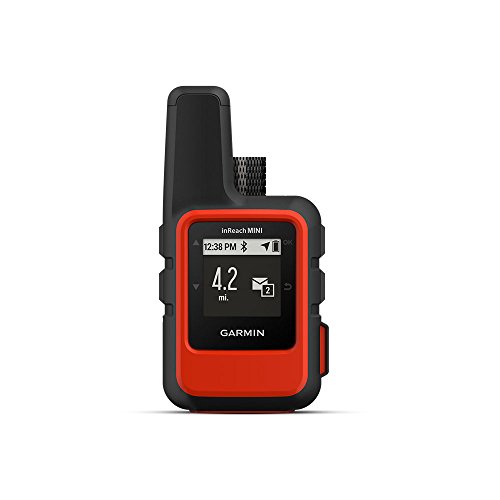
Best Compact Pick – Garmin inReach Mini
Garmin 010-01879-00 InReach Mini, Lightweight and Compact Satellite Communicator, Orange
Check Price On AmazonFor hikers seeking satellite communicators for cold weather, the Garmin inReach Mini combines a compact design with two-way messaging over the global Iridium network. Its optional weather forecasts, downloadable mapping through the Earthmate app, and SOS function add practical value for remote trips, though a satellite subscription is required.
Best For: Lightweight backcountry users who want two-way messaging and emergency SOS capability.
Pros:
- Compact, rugged, and lightweight design
- Two-way text messaging and interactive SOS through Iridium
- Optional weather forecasts and access to maps through a compatible device
Cons:
- Requires a satellite subscription for messaging, SOS, and weather services
- Small 0.9-inch display with 128 x 128 resolution
The inReach Mini is a strong choice when pack weight and two-way communication matter most. Its small monochrome screen makes a paired smartphone useful for maps and easier message handling.
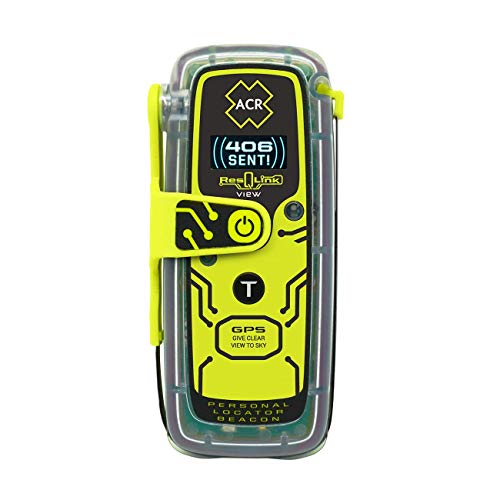
Best No-Subscription Rescue Beacon – ACR ResQLink View PLB425
The ACR ResQLink View PLB425 is a focused emergency beacon for people comparing satellite communicators for cold weather. It sends a GPS-equipped SOS through the 406 MHz COSPAS-SARSAT system without a subscription, and its buoyant, waterproof design suits demanding outdoor environments.
Best For: Hikers, climbers, boaters, and campers who primarily need reliable emergency location signaling.
Pros:
- No subscription required for SOS signaling
- Worldwide coverage through COSPAS-SARSAT with GPS positioning
- Buoyant, waterproof design with belt clip, straps, and lanyards
- Visible LED and infrared strobe lights support rescue signaling
Cons:
- Designed primarily for SOS rather than ongoing two-way messaging
- Battery life is listed at 28 hours
The ResQLink View is best understood as a dedicated personal locator beacon, not a general-purpose messaging device. It is a practical option for cold-weather users who want emergency signaling without recurring service fees.
Best Group Communication Option – Garmin Rino 750t
The Garmin Rino 750t takes a different approach to satellite communicators for cold weather by combining a 5-watt GMRS radio with mapping and position sharing. It supports voice and unit-to-unit text communication, includes multi-GNSS positioning, and offers a sunlight-readable touchscreen for group outings.
Best For: Groups that stay within radio range and want location sharing, mapping, and weather features in one handheld.
Pros:
- 5-watt GMRS radio supports voice and unit-to-unit text
- Position reporting shows other Rino users on the same channel
- Preloaded TOPO U.S. 100K maps and worldwide basemap
- Dual battery system offers up to 14 hours with lithium-ion or 18 hours with optional AA batteries
Cons:
- Communication features are based on GMRS and Rino users rather than global satellite messaging
- Optional AA batteries are not included
- Larger handheld design may be less convenient for minimalists
The Rino 750t is a capable group-navigation tool, but it should not be treated as a standalone global satellite messenger. Its strengths are local radio communication, mapping, and sharing positions with compatible Rino users.
Best Satellite Phone for Voice – OSAT IsatPhone 2
For buyers considering satellite communicators for cold weather who need voice calls, the OSAT Inmarsat IsatPhone 2 offers satellite calling, SMS, GPS tracking, and an emergency assistance button. Its shock-, dust-, and splash-resistant design and long standby time support remote use, but coverage excludes polar regions and airtime must be purchased.
Best For: Remote users who prioritize satellite voice calls and extended standby time over compact messaging.
Pros:
- Supports voice calls, SMS, and GPS tracking
- Up to 8 hours of talk time and 160 hours of standby
- Emergency assistance button sends GPS location data to contacts
- Weather-resistant design with incoming call alerts when the antenna is stowed
Cons:
- Coverage excludes polar regions
- Requires a purchased prepaid or postpaid airtime plan
- Voice-focused handset is less compact than a small satellite messenger
The IsatPhone 2 makes sense when dependable voice communication is the priority. Cold-weather travelers in or near polar regions should verify coverage carefully, while all users should account for the separate airtime cost.
Global SOS Pick – ACR Bivy Stick Bundle
NEW ACR Bivy Stick 2-Way Satellite Communicator with Carrying Case and Carabiner Bundle
Check Price On AmazonThe ACR Bivy Stick bundle is a practical option for anyone comparing satellite communicators for cold weather and wanting off-grid messaging, location sharing, and navigation. Its included pouch has a belt attachment and carabiner for carrying over winter layers.
Best For: Hikers, campers, and travelers who want global satellite communication with a protective carry system.
Pros:
- Supports SOS emergency rescue communication.
- Offers unlimited check-in messages and GPS location sharing.
- Provides offline maps and navigation without cell coverage.
- Includes a protective pouch with belt attachment and carabiner.
Cons:
- Requires a compatible smartphone for use.
- The supplied notes do not specify cold-weather battery performance.
This bundle stands out for pairing core satellite safety features with convenient carry accessories. Before winter trips, verify phone battery management and service requirements for your route.
Best Cold-Weather Radios – Radioddity HD-2 Walkie Talkies
For close-range teams researching satellite communicators for cold weather, the Radioddity HD-2 offers a different approach: rugged local radio communication rather than satellite messaging. Its cold-resistant batteries are rated for use down to -22°F/-30°C, with waterproofing and glove-friendly controls for winter activities.
Best For: Ski groups, winter hunters, and backcountry teams communicating within radio range.
Pros:
- 2500mAh cold-resistant batteries support use down to -22°F/-30°C.
- IP67 protection resists water, dust, and snow, including submersion up to 1 meter for 30 minutes.
- Provides a stated maximum range of up to 4 miles in open spaces.
- Includes NOAA weather alerts, SOS signaling, and USB-C emergency power output.
Cons:
- FRS radio communication is range-limited and is not global satellite coverage.
- Actual range varies by terrain and conditions.
- Battery charging and operation may require managing the included battery pack in severe cold.
The HD-2 is especially compelling when your group stays within practical two-way radio range. Choose a true satellite communicator instead if you need global messaging or emergency contact beyond local radio coverage.
Best Global Tracking – ACR Bivy Stick Satellite Communicator
The ACR Bivy Stick is a strong choice among satellite communicators for cold weather when global coverage, tracking, and SOS monitoring matter more than voice calling. It uses Iridium satellites with an iOS or Android app for two-way messages, offline maps, weather updates, and location sharing in remote areas.
Best For: Skiers, hikers, guides, and outdoor teams needing global tracking and two-way emergency communication.
Pros:
- Uses 100% global Iridium satellite coverage for messaging, tracking, and SOS features.
- Offers 24/7 SOS monitoring through Global Rescue.
- Supports unlimited GPS check-ins, live tracking, and group tracking for up to 12 people.
- IPX7- and MIL-STD-810-compliant enclosure with a stated 120-hour average battery life.
Cons:
- Requires an iOS or Android device and the Bivy app for many functions.
- Service requires a subscription plan and an initial three-month commitment.
- The supplied notes do not provide a specific low-temperature operating rating.
With global coverage and extensive tracking tools, this model suits serious off-grid travel and organized groups. Account for the subscription cost and protect both the communicator and phone from cold-related battery drain.
Top Pick for Confirmed Rescue Alerts – ACR ResQLink View RLS PLB
For hikers, boaters, and backcountry users comparing satellite communicators for cold weather, the ACR ResQLink View RLS PLB stands out as a compact, subscription-free emergency beacon. Its LCD, infrared strobe, and Return Link Service provide useful reassurance when visibility and conditions deteriorate.
Best For: Cold-weather adventurers who want a lightweight, no-subscription SOS beacon with confirmation that rescuers received the alert.
Pros:
- Return Link Service confirms that Search and Rescue received the distress signal.
- GPS, Galileo GNSS, and MEOSAR compatibility support global positioning.
- Five-year battery life, 28+ hours of operational life, and built-in buoyancy.
- LCD display, infrared strobe, and compact clip system improve emergency usability.
Cons:
- Designed as a personal locator beacon rather than a two-way messaging device.
- Its small display and button controls may feel limited for users wanting broader navigation features.
The ResQLink View RLS is a focused emergency tool, not a general-purpose satellite phone. For cold-weather trips where reliable distress signaling, portability, and long-term readiness matter most, its no-fee design is especially appealing.
Best for Global Voice Communication – BlueCosmo Iridium Extreme 9575
Among satellite communicators for cold weather, the BlueCosmo Iridium Extreme bundle is the most capable choice for users who need voice calls, SMS, GPS tracking, and SOS access. Its Iridium network coverage includes polar regions, while the rugged handset is built for demanding outdoor conditions.
Best For: Expedition teams, remote workers, and travelers who need global voice and messaging service in cold or isolated regions.
Pros:
- Iridium coverage extends across the globe, including oceans and polar regions.
- Supports voice calls, SMS, GPS tracking, and emergency SOS.
- Military-standard ruggedness and IP65 ingress protection help handle harsh environments.
- Bundle includes chargers, holster, earpiece, external antenna accessories, SIM card, and warranty.
Cons:
- Requires prepaid airtime, unlike the subscription-free ACR beacons.
- Heavier and more complex than a dedicated personal locator beacon.
- Voice, messaging, and tracking use service airtime.
The Iridium Extreme is the strongest option here for two-way communication and ongoing coordination. Its polar coverage and rugged construction suit serious cold-weather travel, provided you are comfortable managing prepaid service and a larger handset.
Best Simple Subscription-Free Beacon – ACR ResQLink 400 PLB
The ACR ResQLink 400 is a straightforward option for shoppers seeking satellite communicators for cold weather without recurring fees. It focuses on emergency rescue, combining 406 MHz distress signaling, GPS and Galileo positioning, and high-visibility strobes in a waterproof personal beacon.
Best For: Hikers, boaters, and aviation users who want a simple, subscription-free emergency locator for low-light and wet conditions.
Pros:
- No subscription required for ongoing readiness.
- 406 MHz distress and homing signals help rescuers identify the beacon.
- GPS, Galileo GNSS, Cospas-Sarsat, and MEOSAR support global rescue coverage.
- Waterproof design plus LED and infrared strobes improve visibility.
Cons:
- Provides emergency distress signaling rather than voice or SMS communication.
- Does not include the ResQLink View RLS confirmation feature listed for the newer model.
The ResQLink 400 is a practical, low-maintenance rescue beacon for cold-weather users who prioritize simplicity. Its waterproof construction and visibility features make it well suited to exposed outdoor activities, though it is not intended for routine two-way contact.
How We Picked the Best Satellite Communicators for Cold Weather
We evaluated the selected devices by communication type, emergency functionality, satellite-network coverage, weather resistance, portability, power options, and suitability for winter use. Satellite messengers and phones support ongoing two-way communication, while personal locator beacons focus on sending an SOS through dedicated rescue networks. Two-way radios are useful for nearby groups but generally do not replace satellite equipment beyond cellular range.
Cold-weather performance received particular attention. Batteries lose capacity in freezing conditions, and gloves, snow, moisture, and limited visibility can make small controls difficult to use. Devices with clear status indicators, simple SOS activation, dependable GPS positioning, and practical carrying options are especially valuable.
Quick Comparison
| Device type | Best for | Communication | Main consideration |
|---|---|---|---|
| Satellite messenger | Backcountry messaging and tracking | Two-way text, SOS, GPS | Requires a service plan and open sky |
| Satellite phone | Voice communication in remote regions | Voice, text, GPS | Higher cost and larger size |
| PLB | Critical emergency rescue | One-way SOS and location | Limited routine communication |
| Two-way radio | Communication within a nearby group | Local radio | Range depends on terrain and conditions |
Key Buying Factors for Satellite Communicators for Cold Weather
Battery Life and Cold-Weather Power
Check the advertised runtime for tracking, messaging, or standby rather than relying only on the maximum standby figure. Store the device inside an insulated pocket, carry a power bank where practical, and confirm that charging ports and cables can be handled with gloves.
Network Coverage and Communication Needs
Choose a messenger for routine texts and location sharing, a satellite phone for voice conversations, or a PLB when emergency signaling is the priority. Global coverage claims still depend on satellite visibility, regional network availability, and an unobstructed view of the sky.
Durability and Usability
Look for water resistance, buoyancy when relevant, impact-resistant construction, readable displays, tactile buttons, and straightforward SOS controls. A device that is difficult to operate in thick gloves or blowing snow may be less useful than a simpler model.
Plans, Registration, and Accessories
Satellite messengers and phones typically require activation, airtime, or subscription fees. PLBs must be registered according to local requirements. Include a lanyard or case, spare charging equipment, and any external antenna or mounting accessories needed for your trips.
Who Should Buy Which Satellite Communicators for Cold Weather?
- Choose a satellite messenger if you want two-way texting, tracking, weather updates, and an SOS function for hiking, skiing, or expedition travel.
- Choose a PLB if your main priority is a dedicated emergency beacon with long-term readiness and minimal subscription dependence.
- Choose a satellite phone if remote voice calls are important for guides, field teams, or extended international travel.
- Choose a two-way radio for short-range coordination among companions, but pair it with a satellite device for backcountry emergencies.
Before leaving, test the device, update contact details, download required apps or maps, and confirm that your itinerary and emergency plan match the equipment you carry.