Carrying a bike on the roof can preserve trunk space and keep your hitch free, but the right rack must hold the frame or wheels securely without making loading unnecessarily difficult.
We compared 10 upright roof bike racks across mounting style, bike compatibility, security features, crossbar fit, and everyday usability to help you choose a dependable match for your vehicle and riding setup.
Best 10 Upright Roof Bike Racks Picks for 2026
Frame-Free Protection

- No frame contact
- Fits 20–29-inch wheels
- 44-pound capacity
Best For: Carbon frames and unconventional bike designs
Broad Bar Compatibility

- Front-wheel mounting
- Fits multiple bar styles
- Up to 45-pound capacity
Best For: Mixed crossbar setups and varied bike types
Guided Frame Mounting

- Controlled frame-holding dial
- Soft protective claw pads
- 44-pound capacity
Best For: Simple loading with guided frame support
Secure All-Weather Build

- Three locking systems included
- No frame contact or wheel removal
- 45-pound capacity
Best For: Frequent travel and varied roof-bar setups
Best Overall
RockyMounts Tomahawk Upright Roof Bike Rack

- Secures the bike without frame contact
- Fits tires up to 5 inches wide
- Works with multiple crossbar styles
Best For: Versatile bike and crossbar compatibility, including fat bikes
Best Fork-Mount Value
Swagman Standard Fork Mount Roof Bike Rack
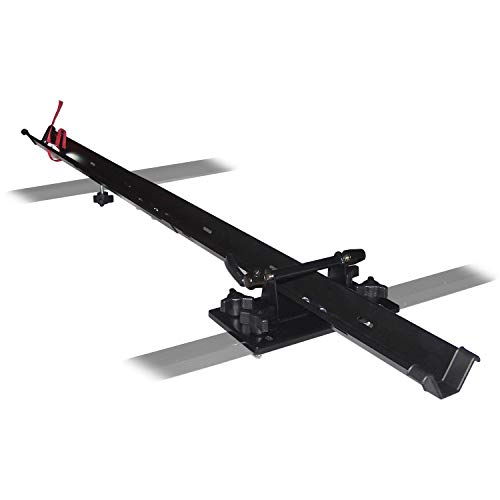
- Uses a 9mm quick-release fork mount
- Tool-free assembly
- Fits bars up to 3 inches wide
Best For: Simple rooftop transport for compatible quick-release bikes
Best Lightweight Frame-Mount Pick
Swagman Upright Roof Mount Bike Rack
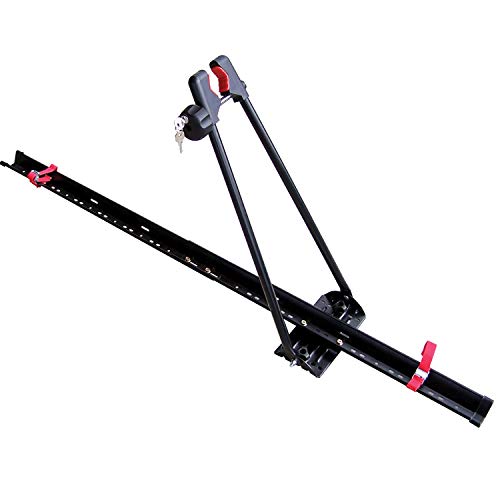
- Carries one bike without wheel removal
- Weighs only 5 pounds
- Includes a lockable downtube clamp
Best For: Conventional bikes within the rack’s frame and tire limits
Best with Extra Features
Dual-Arm Frame-Free Roof Bike Rack

- Supports one bike up to 50 lb
- Fits wheels up to 29 inches and tires up to 3.1 inches
- Folding arms and T-/U-bolt mounting hardware
Best For: Versatile single-bike roof carrying
Best for Two Bikes

- Carries two bikes up to 44 lb each
- Fits 18- to 29-inch wheels with tires up to 3.1 inches
- Requires 29.76-inch crossbar spacing and staggered positioning
Best For: Transporting two compatible bikes
Best Single-Bike Value

- Carries one bike up to 44 lb
- Fits 18- to 29-inch wheels and tires up to 3.1 inches
- Dual ratchet locks secure both wheels
Best For: Simple single-bike roof transport
Frame-Free Protection – Thule UpRide
The Thule UpRide is a strong option among upright roof bike racks for riders who want a wheel-mounted design with no frame contact. It fits most 20–29-inch bicycles, supports tires up to 3 inches wide, and carries bikes up to 44 pounds without removing the front wheel.
Best For: Carbon-frame bikes, non-traditional frames, rear-suspension bikes, and riders who want quick wheel-based loading.
Pros:
- No frame contact helps protect carbon and unconventional frames.
- Fits most 20–29-inch wheels and tires up to 3 inches wide.
- Ratcheting wheel strap and secure hook make mounting straightforward.
- Works with Thule systems and most factory racks.
Cons:
- Fat-bike tires up to 5 inches require a separate adapter.
- Locks are sold separately.
With its broad bike compatibility and wheel-only hold, the UpRide is a practical choice when frame protection is a priority. Its 44-pound capacity also accommodates many heavier mountain bikes.
Broad Bar Compatibility – RockyMounts BrassKnuckles
The RockyMounts BrassKnuckles is an upright roof bike rack that secures a bike by its front wheel, avoiding frame contact and front-wheel removal. It fits square, round, factory, and aero crossbars, with capacity up to 45 pounds on compatible aftermarket bars.
Best For: Riders needing flexible crossbar compatibility and a wheel-mounted rack for road, mountain, or kids’ bikes.
Pros:
- Fits square, round, factory, and aero crossbars.
- No front-wheel removal or frame contact is required.
- Supports 20–29-inch wheels and tires up to 3 inches wide.
- Accommodates wheelbases from 34 to 48 inches.
Cons:
- Factory crossbar capacity is limited to 35 pounds.
- Fat tires up to 5 inches require an additional Fattie Kit.
- Lock cores are sold separately.
The BrassKnuckles stands out for its adaptable mounting hardware and broad wheelbase range. Check your crossbar type and load rating carefully, especially when using factory bars.
Guided Frame Mounting – Thule ProRide XT
Thule ProRide XT Roof Bike Rack | ProRide XT Roof Bike Rack - Universal Fit, Lightweight, Secure #
Check Price On AmazonThe Thule ProRide XT is an upright roof bike rack designed for quick, secure frame-mounted loading. Its frame holder and wheel tray help position the bike as you tighten the rack, while soft claw pads are intended to minimize the risk of frame damage.
Best For: Riders who prefer guided frame mounting and want a straightforward rack for one bike up to 44 pounds.
Pros:
- Quick-mounting dial helps control pressure on the bike frame.
- Soft claw pads adapt to the frame.
- Frame holder and wheel tray automatically help position the bike.
- Fits Thule systems and most factory racks.
Cons:
- The rack secures the bike through the frame rather than exclusively by the wheels.
- Locks are sold separately.
- It carries one bike at a time.
The ProRide XT is a sensible pick for riders who value an assisted, organized loading process. Its 44-pound capacity suits many standard road and mountain bikes, while the adjustable holder accommodates different frame shapes.
Secure All-Weather Build – Rhino-Rack RBC050
The Rhino-Rack RBC050 is an upright roof bike rack with a ratcheting front-wheel arm, wheel straps, and no frame contact. It fits most factory, round, square, elliptical, and Rhino-Rack aero bars, and carries bikes up to 45 pounds with tires up to 2.7 inches wide.
Best For: Riders seeking a durable aluminum carrier with included locking features and compatibility with several roof-bar styles.
Pros:
- Includes three locking systems, keys, and a security cable.
- No wheel removal or frame contact is required.
- Fits 20–29-inch wheels and multiple axle sizes.
- Powder-coated aluminum tray and arm are built for weather resistance.
Cons:
- Tire width is limited to 2.7 inches.
- It supports crossbar spacing from 21 to 39 inches.
- Its 45-pound capacity still requires checking the vehicle and bar limits.
The RBC050 combines wheel-based loading with a useful set of included security components. Its folding arm and broad bar compatibility make it convenient for regular travel, provided your tire width and crossbar spacing match.
Best Overall – RockyMounts Tomahawk Upright Roof Bike Rack
For riders comparing upright roof bike racks, the RockyMounts Tomahawk is a versatile option that secures the bike by its wheels rather than the frame. It fits round, square, factory, and aero crossbars, carries bikes with 20- to 29-inch wheels, and supports tires up to 5 inches wide.
Best For: Riders who want broad bike and crossbar compatibility, including fat bikes.
Pros:
- No bike-frame contact; the front wheel hook and wheel straps secure the bike.
- Fat-bike ready for tires up to 5 inches, with two wheel-strap extensions included.
- Swingarm adjusts for driver-side or passenger-side installation.
- Fits round, square, factory, and aero crossbars.
Cons:
- Its 35-pound load limit is not intended for heavier bikes.
- It does not fit bikes with front fenders.
The Tomahawk stands out among upright roof bike racks for its frame-free hold and fat-tire compatibility. Its 35-pound capacity and front-fender restriction are the main fit checks before buying.
Best Fork-Mount Value – Swagman Standard Fork Mount Roof Bike Rack
Swagman Standard Fork Mount Roof Bike Rack – Rooftop Bike Carrier for 9mm Quick Release Bikes
Check Price On AmazonThe Swagman Standard is a straightforward choice among upright roof bike racks for bikes using a 9mm quick-release setup. It attaches to square, round, and oval bars up to 3 inches wide and is designed to carry one bike.
Best For: Owners of 9mm quick-release bikes seeking a simple, tool-free fork-mount carrier.
Pros:
- Assembles without tools in just a few minutes.
- Includes fork-mount blocks with 9mm quick-release skewers.
- Fits square, round, and oval crossbars up to 3 inches wide.
- Supports up to 35 pounds.
Cons:
- Requires a 9mm quick-release bike setup.
- Fork mounting means the bike is not carried with both wheels installed.
The Standard keeps the design focused and easy to assemble, making it practical for compatible quick-release bikes. Check your bike’s fork and your crossbar dimensions before choosing it.
Best Lightweight Frame-Mount Pick – Swagman Upright Roof Mount Bike Rack
The Swagman Upright is a lightweight option among upright roof bike racks, carrying one bike without wheel removal. Its frame clamp and wheel tie-down straps fit square, round, and oval crossbars up to 3 inches wide.
Best For: Riders with conventional frames, tires up to 2.5 inches wide, and bikes weighing no more than 35 pounds.
Pros:
- Carries the bike without removing either wheel.
- Weighs 5 pounds and assembles without tools.
- Fits square, round, and oval crossbars up to 3 inches wide.
- Includes wheel tie-down straps and a lockable downtube clamp.
Cons:
- Limited to tires up to 2.5 inches wide.
- Works best with downtubes 1 to 2 inches wide; wider or square downtubes may be incompatible.
- Its 35-pound capacity is not suitable for heavier e-bikes.
This rack is a practical fit when low weight and no wheel removal matter most. Carefully measure the bike’s downtube and tire width, since compatibility is more limited than with wheel-holding designs.
Best with Extra Features – Dual-Arm Frame-Free Roof Bike Rack
This upright roof bike rack uses two pivoting arms to secure the bike by its wheels, avoiding frame contact and front-wheel removal. It fits many bikes up to 29 inches, with tires up to 3.1 inches wide, and supports up to 50 pounds.
Best For: Riders seeking a versatile single-bike carrier with broad crossbar compatibility and convenient loading.
Pros:
- Wheel-only support helps protect the bike frame from contact and scratches.
- Ratchet lock mode supports one-handed release and easier loading.
- Fits wheelbases up to 48 inches and includes T- and U-bolts.
- Folding arms create a more compact rack when not in use.
Cons:
- It carries one bike only.
- Crossbars must fit the stated size limits and spacing range.
- The listed manufacturer warranty is three months.
With its 50-pound capacity, frame-free wheel hold, and adaptable mounting hardware, this is a practical choice for riders who want a flexible single-bike upright roof rack.
Best for Two Bikes – TOOENJOY Dual Upright Carrier
This two-bike upright roof bike rack uses rotatable arms and dual ratchet locks to hold each bicycle by the wheels. It supports up to 44 pounds per bike, accommodates wheels from 18 to 29 inches, and requires staggered positioning for a double-bike installation.
Best For: Couples or families transporting two compatible bikes on movable crossbars.
Pros:
- Dual carriers provide capacity for two bikes.
- Wheel-only contact helps reduce the risk of frame scratches.
- Single-hand ratchet release simplifies bike attachment and removal.
- Black-coated metal and ABS components are designed for durability.
Cons:
- Each bike is limited to 44 pounds.
- Installation calls for 29.76-inch crossbar spacing and staggered bike placement.
- The manufacturer recommends driving below 60 mph.
This model is the most practical pick when carrying two bikes matters, provided your crossbars meet the spacing requirement and both bikes stay within the weight and tire-size limits.
Best Single-Bike Value – TOOENJOY Upright Roof Carrier
This single-bike upright roof bike rack combines two rotatable load arms with ratchet locks that secure the front and rear wheels without touching the frame. It fits 18- to 29-inch wheels and supports one bike weighing up to 44 pounds.
Best For: Solo riders who want a straightforward wheel-holding carrier for movable crossbars.
Pros:
- Dual arms hold the bike by the wheels for frame-free support.
- One-hand ratchet release helps streamline loading and unloading.
- Accommodates a range of road and mountain bikes with tires up to 3.1 inches wide.
- Metal and ABS construction is designed for strength and durability.
Cons:
- It carries one bike and supports up to 44 pounds.
- Installation requires 29.76-inch crossbar spacing.
- The manufacturer recommends driving below 60 mph.
This is a sensible single-bike option for riders who prioritize wheel-only retention and simple ratchet operation, as long as the vehicle’s crossbars meet the specified spacing requirement.
How We Picked the Best Upright Roof Bike Racks
We focused on practical features that affect ownership rather than relying on appearance or brand recognition alone. Each rack was considered for its mounting method, compatibility with common bike sizes and frame designs, crossbar requirements, loading process, adjustment range, and available locking features. We also weighed whether the design works best for one bike, multiple bikes, quick-release wheels, or bikes that are difficult to secure with a frame-contact arm.
Because roof racks vary widely in fit, confirm your vehicle’s crossbar dimensions, spacing, weight capacity, and the rack’s maximum bike weight before buying. Manufacturer compatibility charts are especially important for bikes with carbon frames, unusual tube shapes, fenders, fat tires, or thru-axles.
Quick Comparison
- Best all-around convenience: Thule UpRide, with a wheel-securement design that avoids direct frame contact.
- Best for traditional frame-arm loading: Thule ProRide XT or RockyMounts Tomahawk.
- Best for quick-release bikes: Swagman Standard Fork Mount.
- Best for value-focused shoppers: The Swagman Upright and generic upright carriers may offer essential functionality at a lower cost.
- Best for carrying two bikes: Look closely at the dual-arm TOOENJOY option and verify total roof-load limits.
Key Buying Factors for Upright Roof Bike Racks
Frame Contact Versus Wheel or Fork Mounting
Frame-contact racks are usually fast to load and work with many standard bikes, but the clamp must fit securely without pressing on vulnerable tubes, cables, or carbon surfaces. Wheel-mount racks reduce frame contact and can be more versatile, while fork-mount models provide a low, stable hold but require front-wheel removal and the correct axle adapter.
Bike and Crossbar Compatibility
Check tire width, wheel size, bike weight, axle type, and frame geometry. Also confirm whether the rack fits your round, square, factory, or aerodynamic crossbars. Some carriers require specific mounting hardware or have limited bar spacing, which can affect placement when carrying two bikes.
Security and Ease of Use
Integrated locks can deter opportunistic theft, but they should not replace a separate cable or secure overnight storage. Consider how easily the arm, wheel tray, or fork clamp adjusts, especially if you regularly load a heavy bike above shoulder height.
Roof Clearance and Driving Practicality
Measure the vehicle’s overall height with the bike installed before entering garages or using low-clearance routes. A rack that folds when empty can reduce wind noise and drag, while a stable tray and well-designed straps can limit movement during highway driving.
Who Should Buy Which Upright Roof Bike Racks?
Choose a premium wheel-securement rack if you want broad bike compatibility and minimal frame contact. Select a conventional upright arm rack for straightforward loading and frequent use with standard-frame bikes. A fork-mount carrier is a good fit for riders who prioritize a low, rigid hold and do not mind removing the front wheel. For occasional trips or budget-conscious ownership, a simpler upright model can work well if its fit, locking hardware, and weight rating match your bike and vehicle.